
EXHIBITION: HUman After all
MARCH 28 - APRIL 16, 2025
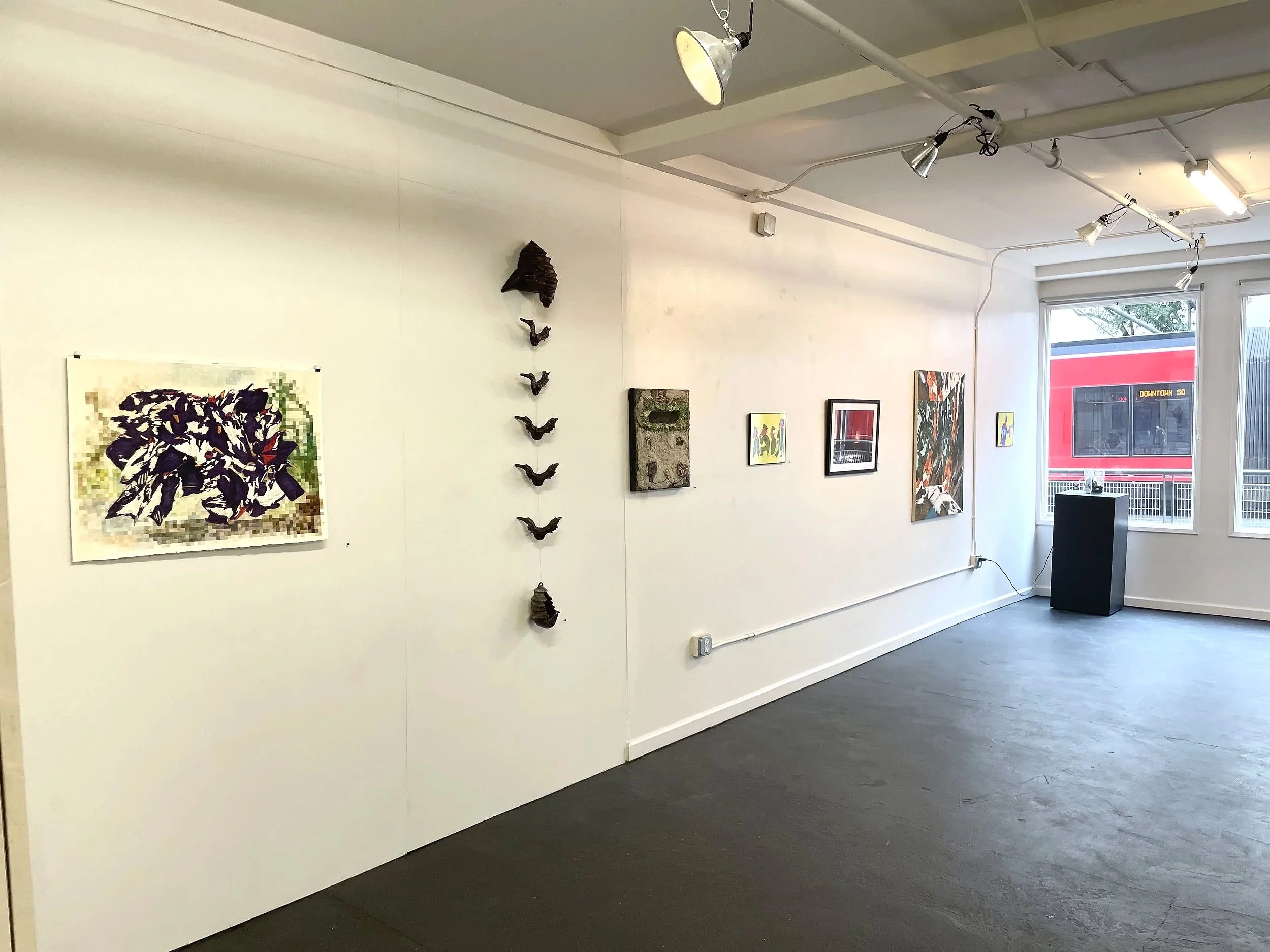
Installation view
Artwork, Left to Right : Breck Allen Lost 23 (1.2) ; Andrew Wharton Lantern/Larva ; Stephen Morris The Rip ; Sebastian Pardo After Grosz III ; Ron Salzetti Scripps Pier; Breck Allen Untitled (for now) ; Sebastian Pardo After Grosz II ; Andrew Wharton Stasis Chamber 5 .
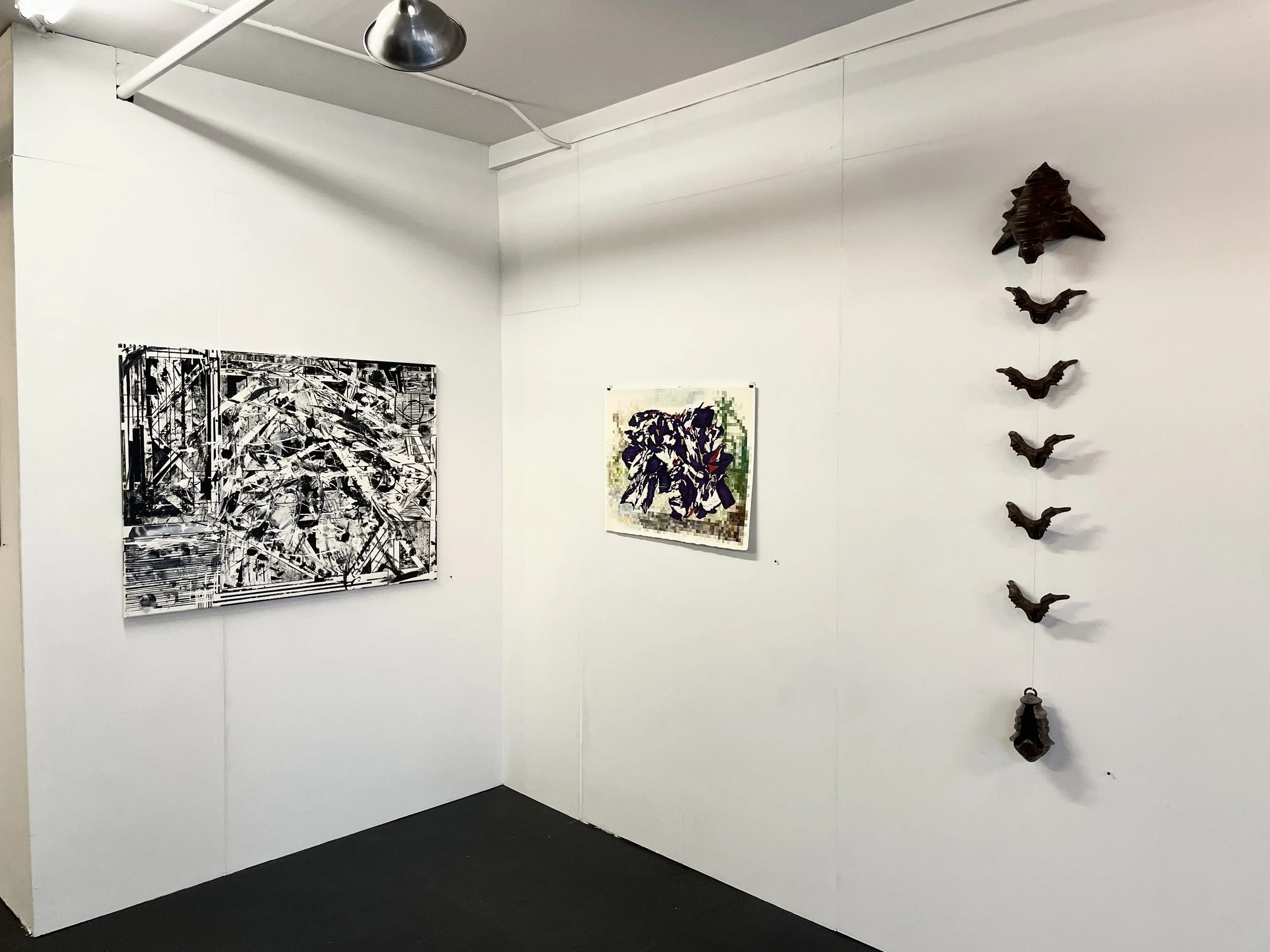
Andrew Wharton Stasis Chamber 5;
Artwork Left to Right: Grant Parker Scripps Pier , Breck Allen Lost 23 (1.2) ; Andrew Wharton Lantern/Larva ;
About
Stephen Morris Spacetime Letters to Vincent; Chuck Contreras Foreshadow; Grant Parker, 20/20 Vision; Breck Allen Lost 23 (1.2);
Human After All examines the persistent presence of the human hand in an era increasingly shaped by digital and technological processes. Rather than positioning the handmade and the digital as opposing forces, the exhibition explores their entanglement—how contemporary artists adopt, mimic, resist, or distort technological aesthetics while remaining rooted in physical labor, bodily reference, and material imperfection.
Across the exhibition, handmade works adopt the visual language of digital systems: schematic structures, artificial surfaces, algorithmic repetition, and mediated imagery. At the same time, digital or technologically inflected practices reveal their human origins through gesture, error, and affect. What emerges is not a clean divide, but a shared terrain where chaos and control, craft and code, coexist.
Grant Parker’s paintings foreground the physicality of mark-making, with visible brushstrokes and layered surfaces that evoke the noise and fragmentation of digital imagery while remaining insistently tactile. In contrast, Breck Allen’s works appear digitally schematic—structured, compressed, and systematized—yet are meticulously handmade, collapsing the distinction between mechanical order and human labor. Their practices operate in parallel, each reflecting the other’s visual logic from opposing material positions.
The human figure surfaces explicitly in the work of Chuck Contreras and Stephen Morris. Contreras’ portraits of his Native American ancestors assert lineage, memory, and presence within a contemporary visual field often dominated by technological abstraction. Morris’ fragmented and abject body parts introduce vulnerability and tension, reminding viewers that the body—messy, fragile, and unresolved—remains central despite technological mediation.
Andrew Wharton’s work occupies a speculative space where traditional hand-built forms collide with imagined digital futures. His imagery, reminiscent of cinematic science fiction landscapes, stages moments of biological and ecological decay around technological objects, suggesting futures where the organic and artificial are inseparable and mutually dependent.
Sebastian Pardo’s seemingly lighthearted paintings introduce humor and animation into the exhibition, yet beneath their playful execution lie references to art history, war, and capitalism. Echoing the satirical legacy of George Grosz, Pardo’s work balances wit with critique, using exaggeration and stylization to expose enduring human systems of power and conflict.
Together, these works resist technological determinism. Human After All is not a celebration of digital progress, nor a retreat into nostalgia for the handmade. Instead, it is an examination of how artists grapple with technology as a condition—absorbing it, contending with it, and reshaping it through human gesture, memory, and intent. The exhibition ultimately affirms that even in the most mediated images, it is the human presence—imperfect, expressive, and unresolved—that endures.
Artists
Sebastian PardoChuck Contreras
Grant Parker
Andrew Wharton
Breck Allen
Ron Salzetti
Stephen Morris
CONTACT: info@brokersbuilding.org
❋ Intentional StructureArtwork Left to Right: Ron Salzetti Scripps Pier; Breck Allen Untitled (for now)
#HumanAfterAll
Sebastian Pardo After Grosz II ;